HarvestNest Seeds
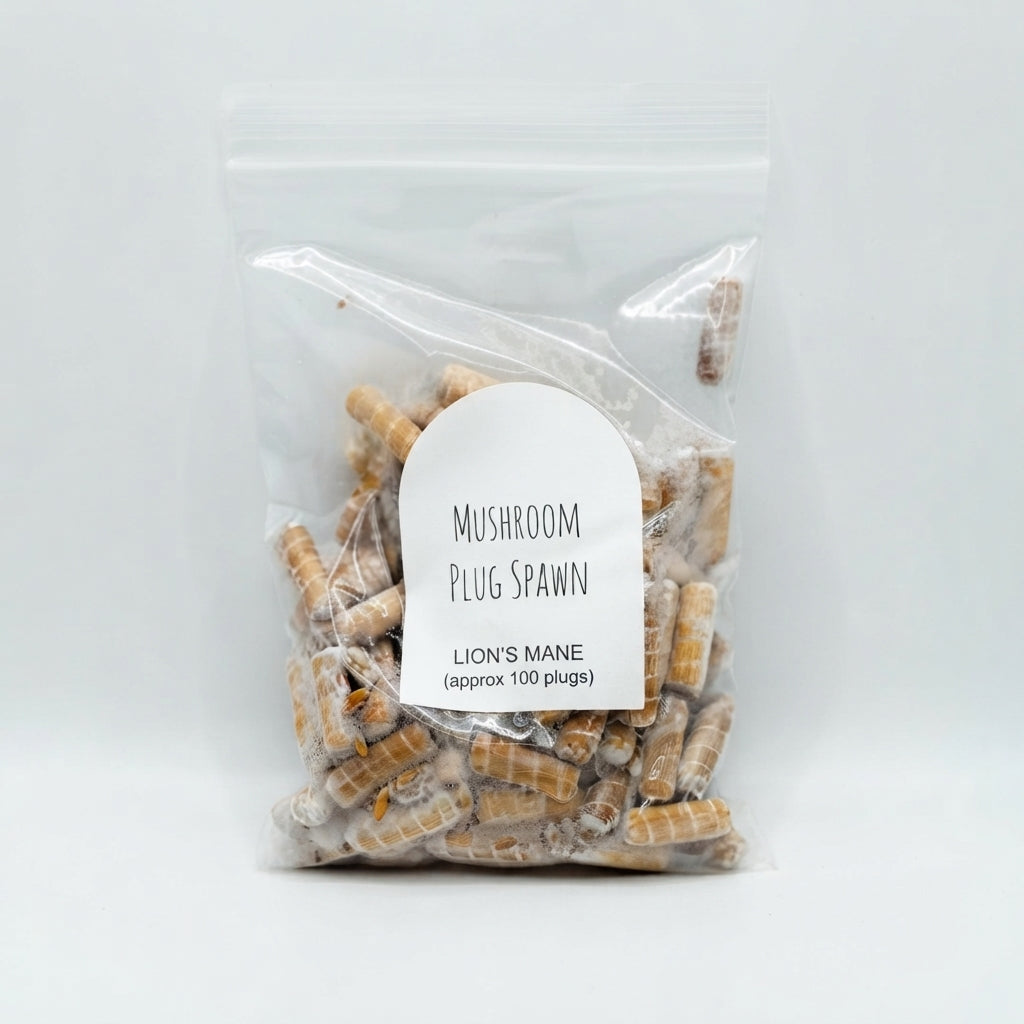
100 Lion's Mane Mushroom Plug Spawn
100 Lion's Mane Mushroom Plug Spawn
Couldn't load pickup availability
💳 No PayPal account required — debit and credit cards are accepted.
Cart size discount
| Cart size | Buy 3+ | Buy 6+ | Buy 9+ |
|---|---|---|---|
| Discount | 5% | 10% | 15% |
Plant More, Save More
Trusted by home gardeners across the USA 🌿
🌱 Free Shipping on Orders $50 🚚
🌱 High Germination Guarantee
🔒 Secure Checkout
Grow your own gourmet Lion’s Mane Mushrooms (Hericium erinaceus) on hardwood logs with ready-to-use plug spawn. Each plug consists of a hardwood dowel colonized with active mushroom mycelium, making log inoculation simple for home growers and small mushroom-growing projects.
Lion’s Mane is prized for its distinctive cascading white spines, tender texture, and mild flavor often compared to seafood.
Quick Facts
- Quantity: 100 Plug Spawn Dowels
- Species: Hericium erinaceus
- Common Name: Lion’s Mane Mushroom
- Product Type: Colonized Hardwood Plug Spawn
- Growing Method: Hardwood Logs or Suitable Stumps
- Recommended Wood: Oak, Maple, Beech, Elm & Other Suitable Hardwoods
- Fruiting Temperature: Approximately 50–65°F
- Colonization Time: Approximately 9–18 Months
- Growing Location: Shaded, Humid Outdoor Area
- Difficulty: Beginner Friendly
- Storage: Refrigerate Until Ready to Use; Do Not Freeze
Why Grow Lion's Mane Mushroom Plug Spawn?
- Easy Log Inoculation – Hardwood plugs can be tapped directly into drilled holes.
- Grow at Home – Create a long-term outdoor mushroom-growing project.
- Gourmet Mushroom – Lion’s Mane develops unique white, tooth-like fruiting bodies with a tender texture.
- Long-Term Harvest Potential – Properly maintained colonized logs may produce mushrooms for several seasons.
- Great for Beginners – Plug spawn requires only basic tools for log cultivation.
About Lion’s Mane Plug Spawn
Lion’s Mane plug spawn consists of hardwood dowels colonized with living Hericium erinaceus mycelium. The plugs are inserted into freshly cut hardwood logs, where the mycelium gradually spreads through the wood.
Plug spawn is particularly convenient for small-scale growers because it can be installed using a drill, hammer or mallet, and wax. After inoculation, the logs are kept shaded and protected from drying while the fungus colonizes the wood.
Perfect For
- Backyard mushroom gardens
- Hardwood log cultivation
- Small-scale mushroom growers
- Woodland gardens
- Homesteads
- Edible landscaping
- Beginner mushroom cultivation
How to Use Plug Spawn?
1. Select Fresh Hardwood Logs
Choose healthy, freshly cut hardwood logs such as oak, maple, beech, elm, or similar suitable species.
For log cultivation, fresher wood is preferred because waiting too long allows competing fungi to establish and the wood to dry out. Cornell recommends inoculating relatively soon after cutting.
2. Drill the Holes
Drill holes around the log in a staggered or diamond pattern.
An 8.5 mm or 5/16-inch drill bit is commonly used for standard plug spawn.
3. Insert the Plugs
Place one colonized plug into each hole and gently tap it in with a hammer or mallet until it sits flush with the bark.
4. Seal with Wax
Cover each inoculation point with food-grade mushroom, cheese, or suitable wax.
Wax helps retain moisture and protects the developing mycelium from drying and competing organisms.
5. Place in Shade
Keep inoculated logs in a shaded, humid outdoor location away from direct drying sunlight.
Maintain moisture and prevent the logs from drying out while colonization occurs.
6. Allow Time to Colonize
Lion’s Mane logs commonly require approximately 9–18 months before they are fully colonized and begin producing mushrooms. Fruiting usually occurs during cool, moist conditions.
Growing Tips
- Use freshly cut, healthy hardwood rather than old or decaying logs.
- Keep inoculated logs shaded and protected from excessive drying.
- Seal every inoculation hole after inserting the plugs.
- Maintain natural moisture without keeping logs continuously waterlogged.
- Be patient—Lion’s Mane generally colonizes more slowly than some oyster mushrooms.
- Fruiting may occur seasonally once the log is fully colonized.
- Harvest when the mushroom is white and the hanging spines have developed but before significant yellowing occurs.
❓ Frequently Asked Questions (FAQ)
What is mushroom plug spawn?
Plug spawn consists of wooden dowels colonized with mushroom mycelium. The plugs are inserted into drilled hardwood logs so the mycelium can spread through the wood and eventually produce mushrooms.
How many logs can 100 plugs inoculate?
The exact number depends on log size and inoculation spacing. A typical plug-spawn rate is about 50 plugs for an average 40-inch-long, 4-inch-diameter log, although Lion’s Mane may benefit from a somewhat higher inoculation rate.
How long before Lion’s Mane mushrooms appear?
Lion’s Mane logs commonly need around 9–18 months to colonize before fruiting, depending on wood type, climate, moisture, inoculation rate, and growing conditions.
What type of wood should I use?
Lion’s Mane grows well on suitable hardwoods such as oak, maple, beech, elm, cherry, and black walnut.
Can the logs produce more than once?
Yes. Once established, properly maintained Lion’s Mane logs can fruit repeatedly over multiple growing seasons. Cornell research on log-grown Lion’s Mane found fruiting can continue for several years.