HarvestNest Seeds
50 White Mulberry Tree Seeds – Morus alba
50 White Mulberry Tree Seeds – Morus alba
Couldn't load pickup availability
💳 No PayPal account required — debit and credit cards are accepted.
Cart size discount
| Cart size | Buy 3+ | Buy 6+ | Buy 9+ |
|---|---|---|---|
| Discount | 5% | 10% | 15% |
Plant More, Save More
Trusted by home gardeners across the USA 🌿
🌱 Free Shipping on Orders $50 🚚
🌱 High Germination Guarantee
🔒 Secure Checkout
Grow the vigorous White Mulberry Tree (Morus alba), a fast-growing deciduous tree known for its broad canopy, adaptable nature, and sweet mulberry fruit. White Mulberry has a long history of cultivation and is well suited to large landscapes, windbreaks, wildlife plantings, and edible gardens.
Quick Facts
- Quantity: 50 Seeds
- Botanical Name: Morus alba
- Common Name: White Mulberry
- Plant Type: Deciduous Fruit Tree
- Sunlight: Full Sun to Partial Shade
- Growth Rate: Fast
- Mature Height: Approximately 30–50 Feet
- Soil: Adaptable; Best in Well-Draining Soil
- Water Needs: Moderate; Drought Tolerant Once Established
- Seed Treatment: Cold Stratification Recommended
- Best Uses: Edible Landscapes, Shade Trees, Windbreaks & Wildlife Gardens
White Mulberry is native to Asia and has been widely cultivated beyond its original range. It is especially noted for its adaptability and drought resistance once established.
Why You’ll Love It
- Fast Growing – Establishes quickly under suitable conditions.
- Sweet Mulberry Fruit – Mature trees can produce abundant edible berries.
- Adaptable Tree – Tolerates a wide range of soils and landscape conditions.
- Useful Shade Tree – Develops a broad canopy as it matures.
- Wildlife Friendly – Fruit attracts birds and other wildlife.
- Drought Resistant – Established trees tolerate dry conditions well.
About White Mulberry
Morus alba is a deciduous tree native to China and other parts of temperate Asia. It was historically cultivated for its leaves, which are used as food for silkworms, and later became widely planted as a shade, windbreak, and fruiting tree.
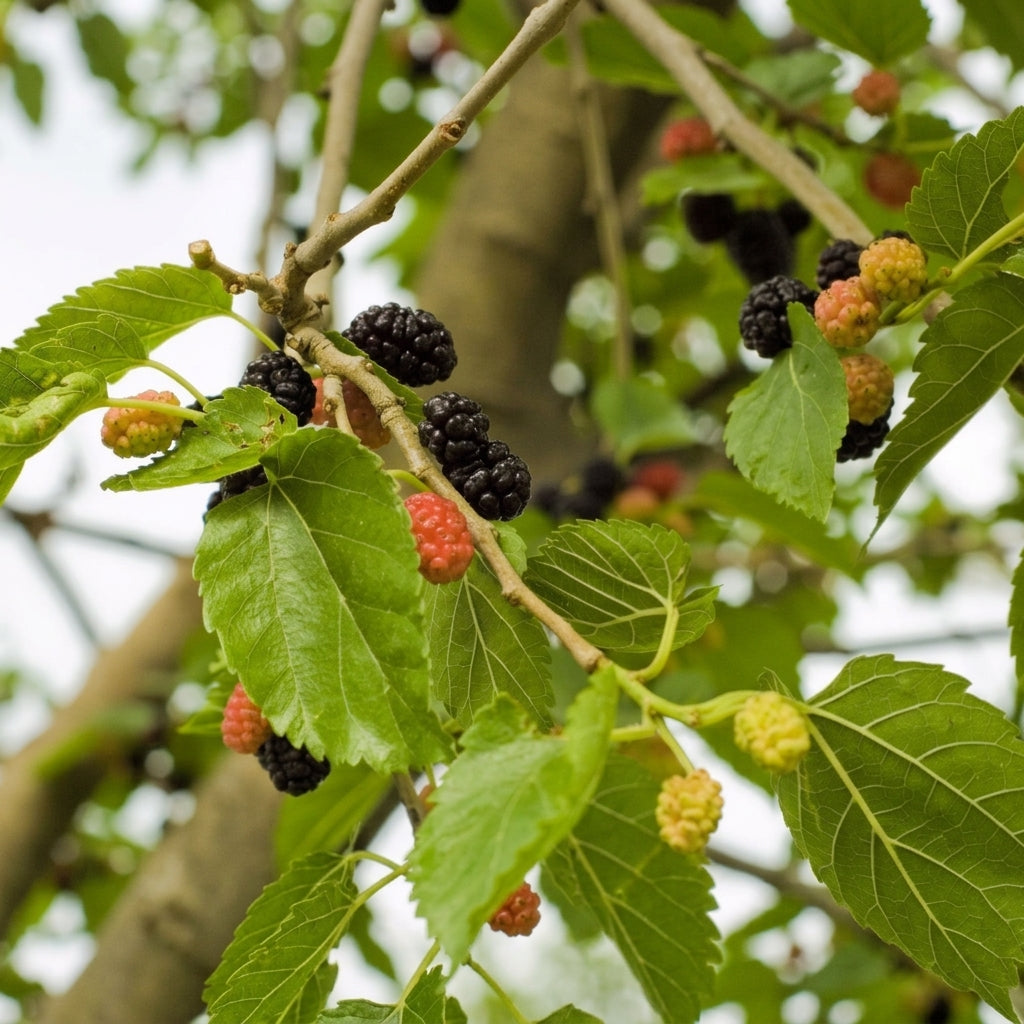
The fruit can vary in color from pale white or pink to reddish-purple or dark purple depending on the individual tree. Seed-grown plants can vary naturally in fruit characteristics, growth habit, and maturity.
Perfect For
- Edible landscapes
- Large gardens
- Wildlife gardens
- Windbreaks and shelterbelts
- Shade-tree planting
- Homesteads
- Orchard-style plantings
How to Grow from Seed
1. Cold Stratify
For best germination, mix the seeds with slightly moist seed-starting medium and refrigerate them for approximately 2–3 months.
Cold stratification helps break seed dormancy and improves germination consistency.
2. Prepare the Growing Medium
Use a loose, well-draining seed-starting mix and moisten it before sowing.
3. Sow
After stratification, sow the seeds shallowly and cover them with a thin layer of growing medium.
4. Keep Moist
Maintain consistent moisture without allowing the soil to become waterlogged.
5. Provide Bright Light
Once seedlings emerge, provide plenty of bright light and good air circulation.
6. Transplant
Move seedlings into individual pots once they are large enough to handle. Plant outdoors after the risk of frost has passed and the young trees are well established.
Growing Tips
- Do not allow the stratification medium to dry out completely.
- Use well-draining soil to avoid excessive moisture around young roots.
- Provide full sun for vigorous growth and better fruiting.
- Water regularly while young trees establish.
- Give mature trees enough room for canopy and root development.
- Mulberries can tolerate pruning and may be maintained at a more manageable size.
- Seed-grown trees may differ from the parent tree in fruit color, flavor, size, and growth habit.
Important Planting Note
White Mulberry is considered invasive in parts of North America and can spread readily by seed through birds and other wildlife. It can also hybridize with the native Red Mulberry (Morus rubra). Check your local or state invasive-species guidance before planting.
❓ Frequently Asked Questions (FAQ)
Does White Mulberry need cold stratification?
Yes. Stored seed generally germinates best after approximately 2–3 months of cold stratification.
How long do White Mulberry seeds take to germinate?
Properly stratified seeds often germinate during the following growing season, although some seeds may take considerably longer.
Will seed-grown White Mulberry trees produce white fruit?
Not necessarily. Despite the common name, Morus alba fruit can range from white and pink to red, purple, or nearly black. Seed-grown trees also show natural genetic variation.
Is White Mulberry drought tolerant?
Yes. Once established, White Mulberry is known for good drought resistance, although young trees benefit from consistent watering while developing their root systems.
Is White Mulberry invasive?
It is considered invasive in parts of the United States because it can spread into natural areas and hybridize with native Red Mulberry. Local planting recommendations should be checked before growing it.